
The music that only makes sense at 4am.
A track that sounds thin on a laptop and unremarkable on headphones can be the only thing that makes sense five hours into a night. Nothing about the file changed. The system, the room and the hour did.
Late Night House
6 min read
Behind the decks · 18 years

A record is not finished until the room finishes it
A house record leaves the studio unfinished, and most of the people who make one know it. What ships is a file — frequencies on a timeline, mixed and mastered against studio monitors or a decent pair of headphones. What actually plays is that file plus a room, a system, a crowd and an hour, and the second list does at least as much of the work as the first.
At home the file is the whole event. In a club at four in the morning it is one ingredient in a much larger one, and a track built with that in mind can read as thin, empty or repetitive right up until the moment it is finally heard the way it was built to be heard.
What a laptop cannot tell you
Two things change between a laptop and a soundsystem, and neither is really about the track.
The first is loudness itself. Human hearing does not respond to bass the same way at every volume — at low levels the ear is comparatively insensitive to the low end, which is the entire reason a quiet room needs a "loudness" button and a club does not. Turn the same mix up to club level and the bottom of it arrives — not because anything was added, but because it was always in the file and simply inaudible at the volume you first heard it at. A bassline that sounds absent at your desk can be the whole architecture of the track once the room is loud enough for you to hear it.
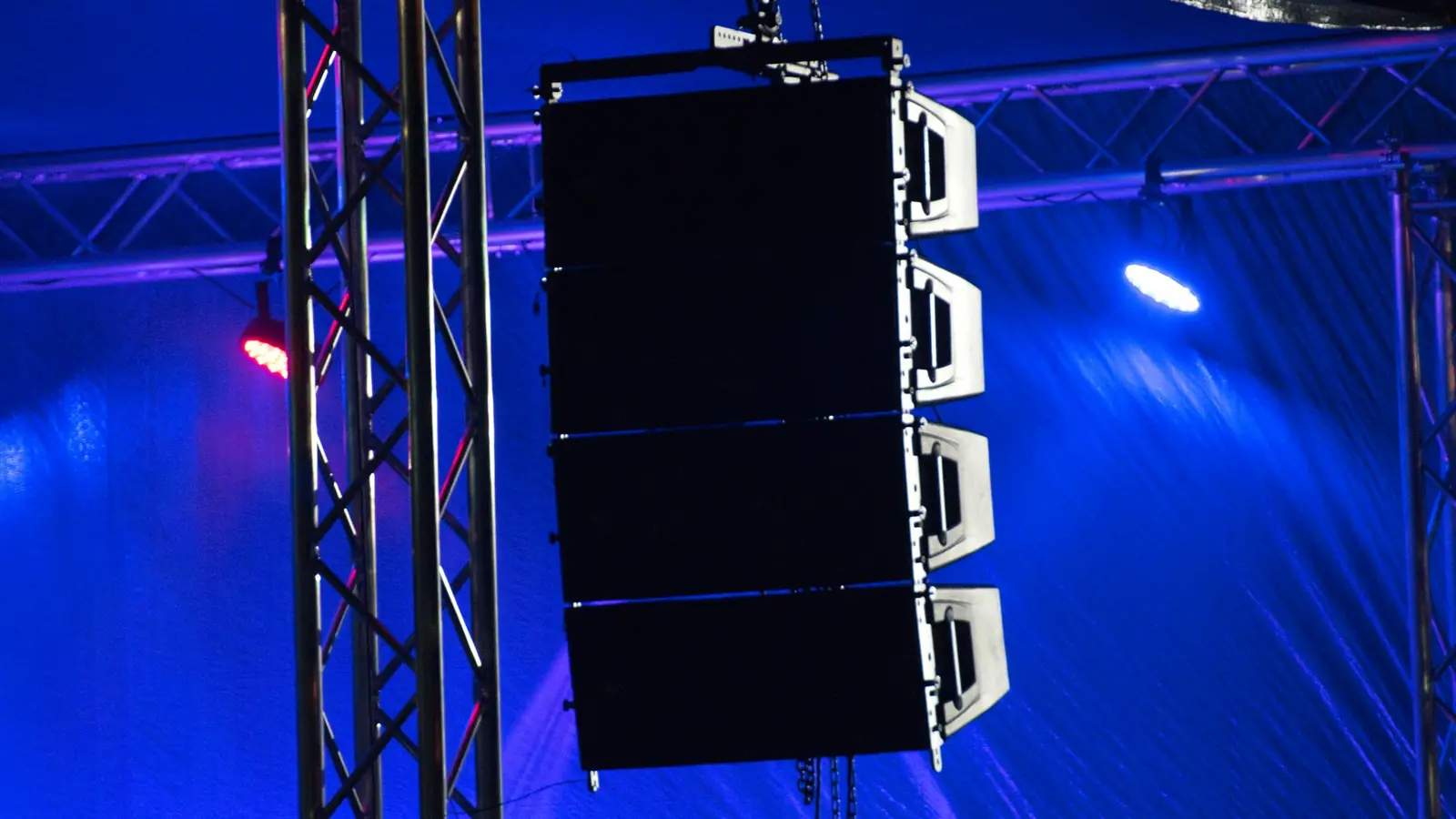
The second is that a proper rig moves air a laptop cannot. Sub-bass below roughly 50Hz is felt in the chest as much as heard, and almost nothing you own at home is built to reproduce it — not a laptop speaker, not most headphones, not a soundbar. A track arranged around that register is not incomplete on your desk. It is missing the half of the frequency range you have no way to hear it on.
By four, the room is listening differently
Early in a night, a room is still evaluating. New arrivals, a DJ they don't know yet, a floor still deciding whether to commit — attention is high and analytical, hunting for hooks, waiting to be convinced. That is exactly the state most production is built for: say something new every eight bars or lose the room.
Five hours in, that room does not exist anymore. The people still there have already decided. Attention has narrowed from evaluating the music to moving with it, which is a different physical task with different requirements — the same synchronising a room does to any repeated pulse, sustained now rather than interrupted. A track that changes every eight bars reads as restless at this hour. One that holds a single idea and lets a room lock into it reads as exactly right.

Nobody is evaluating it
There is also a simpler shift, and it has nothing to do with acoustics. At home, alone, with a track loading, you are a critic — that is the position headphone listening puts you in by default: is this good, is this for me, would I play this.
A club at four in the morning removes that job entirely. Nobody around you is reviewing the set. The room is doing something with the music, not judging it, and a record that would fail a critical listen at a desk can be exactly right for a room that stopped auditioning music hours ago. Art holds up when nobody is watching, which is as true of a stripped-back loop at 4am as of anything else — the tracks built to be judged tend to be the first ones that stop working once nobody is judging.
The track that only works as the ninth record
Some records are not late tracks or early tracks or mid-set tracks. They only function in one position, because whatever came before them has already done half the work.
A night works as a relay, and by four in the morning a set has usually built something no single record could build alone — a room's collective sense of where the arc is heading, patience for a slow build, tolerance for very little happening for a long time. Play the same record cold, as the first thing anyone hears, and none of that exists yet. It just sounds like nothing is happening, because nothing has happened for this crowd to be patient about.
That is the honest answer to "is this a good track": it depends what came before it, tonight, for this room. Reviewed in isolation, the question barely means anything.

What actually gets put on
Eighteen years behind the decks teaches you the same lesson a few hundred times: the records that work at four in the morning are almost never the ones that impress anyone at home. They tend to be short on movement, long on repetition, mixed low and dry, with a bassline doing more of the emotional work than the melody. Played to a friend off a phone speaker they sound like nothing. Played at the right point in the right night, on the right system, they are the only thing that makes sense.
That gap — between what a track sounds like in isolation and what it does in the room — is most of what late-night selection actually is. Less about finding tracks that are impressive, more about knowing which ones survive contact with an exhausted room and still land.
Where this sits in the Hybrid Flight sound
Hybrid Flight works under the claim Emotional Dancefloor Atmosphere, which is built around exactly this gap — mood before genre, an arc rather than a playlist, because a set does most of its work in sequence rather than track by track. The long-form mixes are the honest format for hearing that; a four-minute edit cannot demonstrate what an hour can.
The other two guides here cover the same territory from different angles — what actually separates house from techno in the city this project is based in, and why a record can decline to resolve at all. There is also a mix for the hours either side of peak time, which is this argument in its own format rather than in prose. At the other end of the night, balearic is what the same open-endedness looks like when it is not four in the morning, and Ibiza is where the format that allows it was built into the calendar. And an underground mix is what the same records sound like with no floor in front of them. Promoters may want the booking-side guide instead. And The two ends of a night have guides of their own — what daylight does to a floor and the blue hour as a technique. And the Codex is where the arguments behind all of it are made at length.
Why does music sound different in a club than at home?
Mainly two things, neither about the track itself. Human hearing is comparatively insensitive to bass at low volume, so a club-level system reveals low end that was in the file all along but inaudible at home. And a proper rig moves physical air — sub-bass below roughly 50Hz is felt as much as heard, which almost nothing you own at home can reproduce.
Why do some tracks sound boring at home but amazing on a dancefloor?
Because listening at home is critical listening — alone, evaluating, deciding if a track is good — and a club several hours in removes that job entirely. Nobody around you is reviewing the set. A record built to be judged in isolation and a record built to be moved with are not always the same record.
Does volume alone explain why club music sounds different?
No. Volume changes what frequencies you can hear, but the room also changes what the listener is doing — narrowing from evaluating music to moving with it — and changes what came before the track, which decides whether a slow, repetitive record reads as patient or as nothing happening.
Why do minimal, repetitive tracks work better late at night?
Because by then a room has stopped hunting for hooks and started synchronising to a pulse instead, which is a different task with different requirements. A track that changes every eight bars serves a room still evaluating; a track that holds one idea serves a room that already committed.
What makes a track a "4am track"?
Usually a track that is short on movement, long on repetition, mixed low and dry, with the bassline doing more emotional work than the melody — the opposite of what impresses on a phone speaker. What makes it a 4am track specifically, rather than just a minimal one, is that it also depends on what the room has already been given earlier in the night.
Can headphones or laptop speakers ever really judge a club track?
Not fully. They can judge melody, arrangement and mix balance in the ranges they reproduce, but not the physical sub-bass a club system delivers, and not how the track behaves inside a set rather than played cold. A track can be correctly engineered for a system you are not listening on.
Built for the hour, not the headphones.
Emotional Dancefloor Atmosphere is a mix built as an arc rather than a playlist — mood before genre, with an unreleased demo somewhere in the middle. It makes a different kind of sense on a proper system than it does on a phone.
The arguments this comes out of.
The positions this project works from — on DJ craft, club culture and the industry built around them.
Why a Room Dances Together
The feeling of a room becoming one thing is not an effect of the lights or the volume. It is the oldest social technology we have, working exactly as designed.
Better Than You Think
"If you're an artist, remember that in 2026 there's not a single part of the system that isn't faked. You're probably doing better than you think."
Two Brushstrokes
His image: a painting nobody can see, on a platform where two brushstrokes fit — and the whole canvas hangs somewhere else, on a site nobody visits.