
Nothing switches on. The rest of it goes away.
At dusk the lamps do not get brighter. Everything around them gets darker, fast and measurably — and things that were there all along start to read. That is also the brief for the set.
Sundowner
7 min read
Behind the decks · 18 years
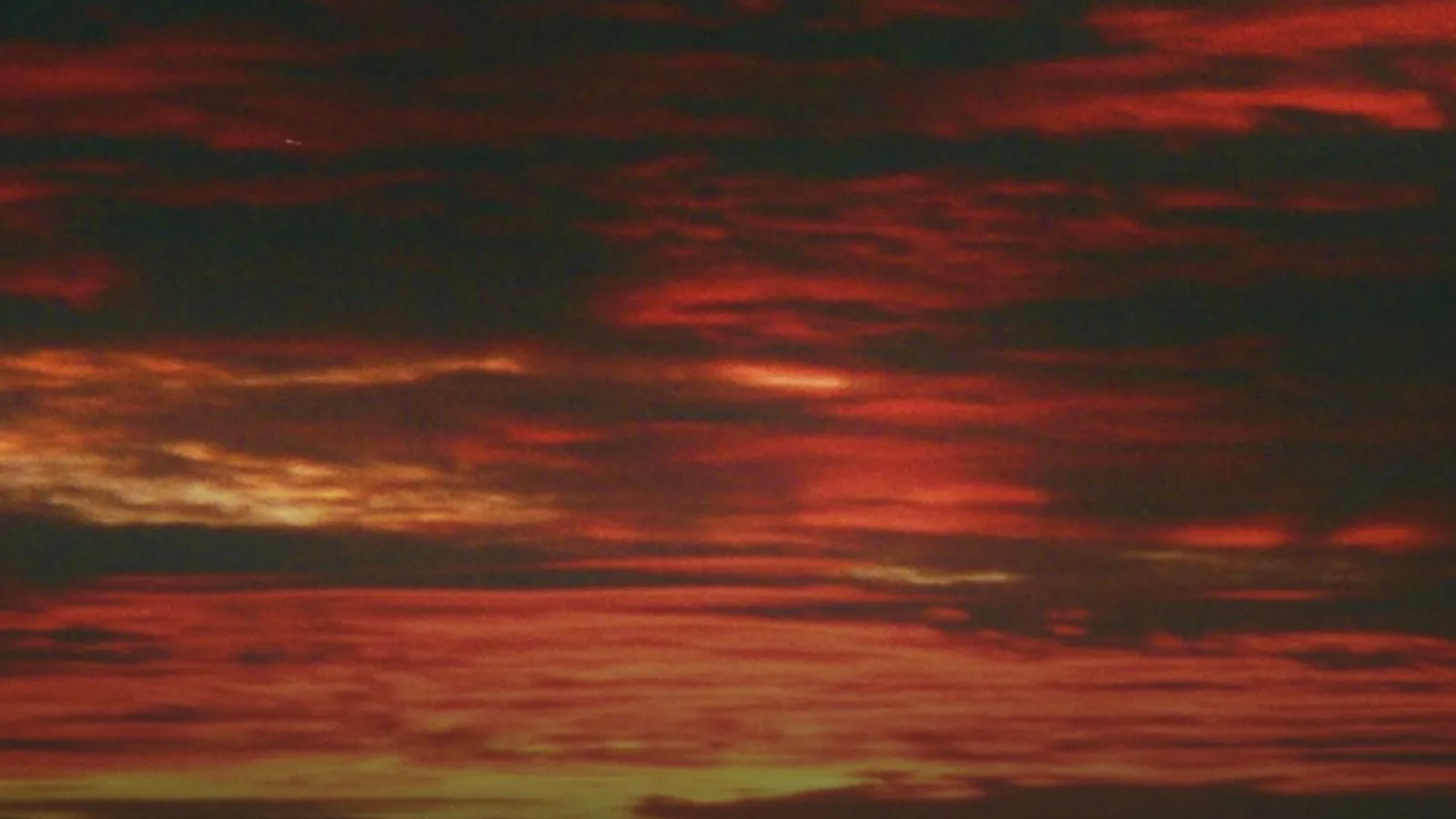
The lights were on all afternoon
Watch a terrace at the right time of evening and you will see something that looks like a decision nobody made. The string of bulbs over the bar, the lamp on the wall, the light inside the doorway — all of them appear to come on at once, sometime in the twenty minutes after the sun goes.
None of them did. They had been burning since the afternoon, invisible against a sky that was simply brighter than they were.
What changed is the balance, and it changes faster than it feels. Across that stretch of twilight the ambient light drops by roughly three to four stops in about twenty minutes — each stop a halving, so the world around those lamps falls to something like an eighth of what it was. Photographers plan for it precisely, because a setting that is correct at the start of civil twilight is several stops wrong by the end of it.
So the bulbs did not become brighter. They became present, and they did it by subtraction. That is not a metaphor I am borrowing for a set. It is a mechanism, and it happens to be the one the hour is asking you to imitate.
It is not a warm-up and it is not chillout
First, the sundowner needs separating from the two things it gets confused with, because both confusions produce bad sets.
It is not a warm-up. A warm-up hands over to a peak in the same room, on the same night, to a crowd that is already committed to being there. The sundowner usually hands over to nothing — people eat, people leave, a night starts somewhere else entirely — and almost nobody in front of you has decided to be a dancefloor yet.
And it is not chillout, which is a mood held flat for an hour. That flattening is its own subject, and the short version is that a sundowner set has somewhere to be: it starts in daylight with a room that is talking and ends somewhere a night could plausibly begin from. The transition is the entire assignment. Skip it and you have produced background music, which is a legitimate thing to make and a different job.
The conditions are also genuinely against you. The room is lit. Conversation is competing at equal volume. Nobody is facing you. You cannot use darkness, you cannot use weight, and you cannot use the fact that everybody has already agreed to be a crowd — which is most of what does the work at four in the morning, all of it unavailable.
Presence by subtraction, which is the actual technique
Which is why the light outside is worth copying rather than merely watching.
The instinct in a talking room is to add: more volume, more percussion, something with a hook to cut through. It occasionally works and it usually reads as pushing, because you are competing with the conversation on its own terms and the conversation has more speakers than you do.
The alternative is the blue-hour move. Instead of raising the thing you want heard, lower everything around it. A record with genuine space in it does this on its own — one element left uncontested in the middle of an arrangement that has stepped back from it. Nothing gets louder. The surroundings recede until the detail is unavoidable, and the room registers it without anyone experiencing it as an interruption.
Practically that means the sundowner rewards the same properties the deep house guide describes — air in the arrangement, weight carried low, changes small enough that they arrive late — for a completely different reason. There it is because a committed floor needs less information. Here it is because an uncommitted room will notice a small thing and resist a large one.
And it lasts about twenty minutes
The honest complication is that the effect everybody builds these sets around barely lasts. Blue hour is shorter than its name promises — a slice of civil twilight, not sixty minutes of it — and the twenty minutes where artificial light and sky sit in balance is the whole of the thing people mean when they talk about that quality of evening.
You cannot programme a three-hour set around twenty minutes. Trying to produces the characteristic failure of the slot: a set that peaks at sunset and then has nowhere left to go, playing out an hour of diminishing returns into a darkness it already spent everything on.
The fix is unglamorous. Treat the balance point as something the set passes through rather than aims at, and keep material for the part afterwards — which is the part where the room has actually gone dark, people have committed or left, and something can begin. The light is not the destination. It is the moment the conditions change, exactly as it is at the other end of the night, where the same event runs in reverse and a room stops being anonymous instead of becoming so.
Where this sits in the Hybrid Flight sound
Hybrid Flight works under the claim Emotional Dancefloor Atmosphere, and the sundowner is where the word atmosphere has to earn itself, because there is no floor and no darkness to borrow from. Sets built as an arc rather than a run of tracks are the only version of this that survives an hour with the lights still on.
The Between Coasts EP was written between Andalusia, Ibiza and Berlin, and Mediterranean sunsets are literally one of its three coordinates — this hour is a substantial part of what the record is about. The Ibiza guide covers the island where the sundowner became an industry, and what got lost when it did.
The rest of the field guides: why house still needs to dream, house music in Berlin, a mix recorded to an empty room, and what a promoter is actually booking. The Codex is where the arguments behind all of it get made at length.
What is sundowner music?
Music for the slot around sunset and the hour after it, before a night proper begins. It is a distinct job rather than a warm-up: the room is usually lit, people are talking, and nobody has committed to a dancefloor yet. Records that need a dark room and a committed floor do not work here, and quiet versions of peak-time records work least of all.
What is the blue hour?
The stretch of twilight when the sun is below the horizon and the sky goes deep blue — overlapping with civil twilight, when the sun sits between zero and six degrees below the horizon. It is shorter than the name suggests, which matters if you are building a set around it.
Why do lights seem to come on at dusk when nothing changed?
Because the balance shifted rather than the lamps. Ambient light drops roughly three to four stops in about twenty minutes across that stretch — photographers plan around exactly this — so the same lamp that was invisible at seven reads clearly at half past. Nothing was switched on. The surroundings fell away from it.
How is a sundowner set different from chillout?
Chillout names a mood and holds it flat. A sundowner set has somewhere to be: it starts in daylight with a talking room and ends somewhere a night could begin from, and that transition is the whole assignment. Treating it as an hour of atmosphere skips the part that makes it difficult.
What should you play at a sundowner?
Records with space in them that do not depend on volume or darkness to land, and a willingness to let things arrive slowly rather than announcing them. The mechanism to imitate is the one happening outside: not adding intensity, but removing enough that small details start to register on their own.
Written between two coasts.
Mediterranean sunsets are one of the three places Between Coasts was written from. This hour is not a mood on that record — it is one of its coordinates.