
Ibiza before the drop.
The island is a calendar before it is a sound — twenty weeks, then nothing — and almost everything people argue about here follows from that one fact rather than from any question of taste.
Ibiza
8 min read
Behind the decks · 18 years
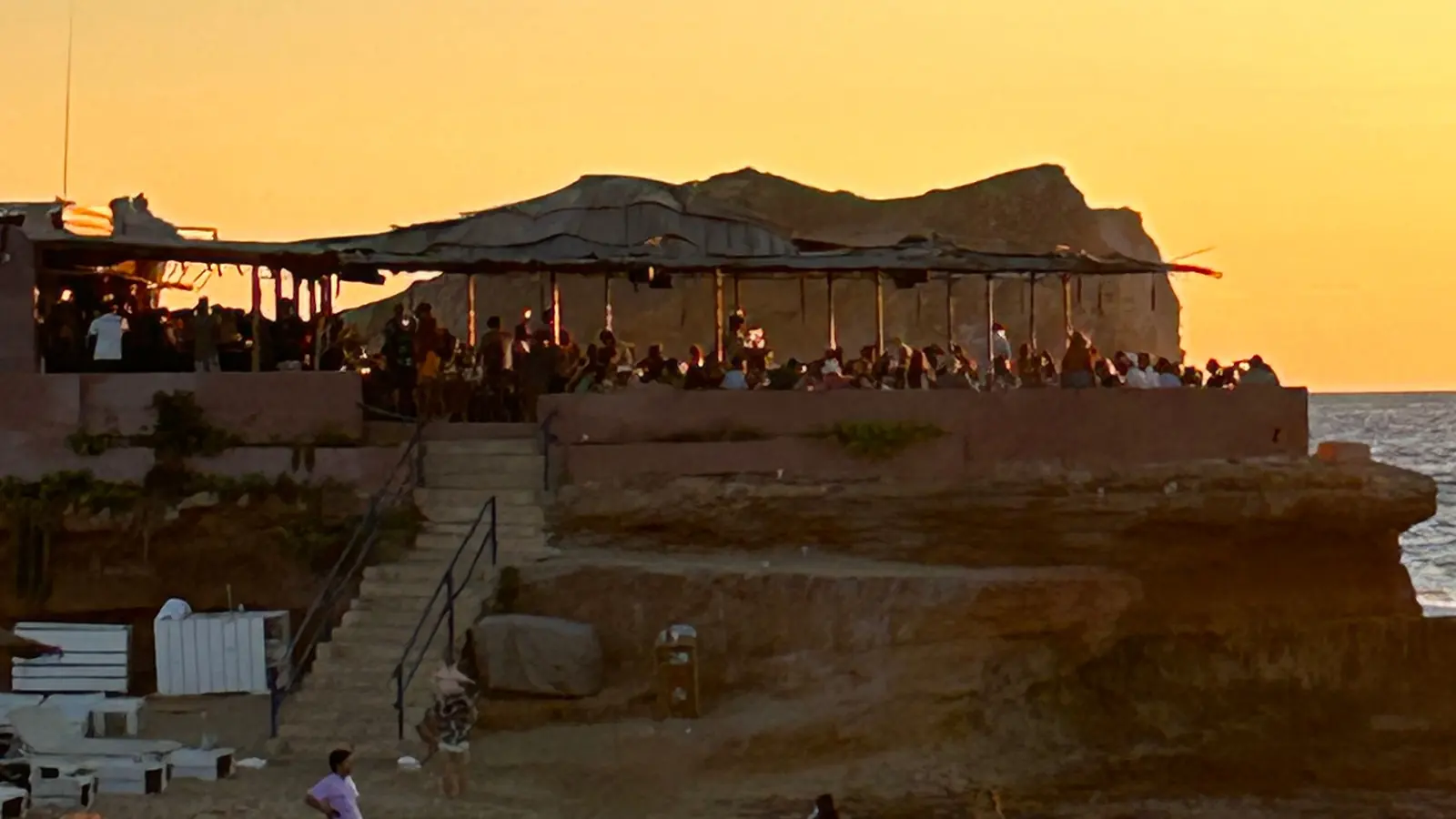
The island is a calendar before it is a sound
Arguments about Ibiza are almost always conducted as arguments about taste — whether the island sold out, whether the music got worse, whether anything real is left. That framing produces nothing, because the thing actually organising the island is not an aesthetic. It is a calendar.
The season opens with parties at the end of April and through May, and it closes in the first fortnight of October. In 2026 the closings run from 28 September to 12 October, most of the flagship nights land in the opening weekend of the month, and Circoloco shuts DC-10 on the twelfth. Pacha's Music On ran from 15 May to 9 October. That is the whole shape of it: roughly twenty weeks on, thirty-two weeks off.
No other place with this reputation works that way. Berlin, London and New York run continuously; a club there has an ordinary Tuesday in February. Ibiza does not have a February in any working sense. The economy, the staff, the residencies and the records all compress into a fifth of the year and then stop.
Once you see the calendar, most of the island's supposed contradictions turn back into consequences. What looks like a cultural choice is usually a scheduling one.
What a residency does that a booking cannot
The first consequence is the residency, and it is the one that matters musically. Elsewhere a DJ's calendar is a run of one-offs: a different city each weekend, a room you have never stood in, a crowd you will not meet again. Ibiza is built the other way. A weekly residency across a season puts the same DJ in the same room roughly twenty times.
That changes who is standing in front of you, and everything downstream of it. A one-off has a single night to justify itself, which quietly rewards records that land on first contact — immediate, legible, no patience required. Nothing about that is dishonest. It is what the format asks for.
A residency asks for something else, because a portion of the room was there last week and may be there next week. You can build across a season rather than across a night. You can spend a Thursday in July setting up something that only pays off in August. You can afford to lose the floor for ten minutes, because losing it is no longer fatal — there is another Thursday. And you can play a record that does nothing the first time somebody hears it and works the third time, which is a category of record that simply cannot survive the one-off circuit.
This is the same argument the deep house guide makes about long blends and small changes, arriving from a different direction: music built on patience needs a format that supplies patience. Ibiza's format supplies it structurally, twenty weeks at a time.
The drop is a shape addressed to strangers
Which brings up the drop, and the reason it is worth being precise rather than sniffy about it.
The drop is an architecture, not a crime. A long build, a withdrawal, a return with everything at once: it is an efficient way to produce a shared event in a room, and it works. It is also, structurally, a shape addressed to strangers. It assumes no prior knowledge, needs no context from earlier in the night, and delivers its whole meaning inside ninety seconds. It is designed to succeed on first contact — which is exactly what a one-off booking and a festival slot require.
That is why it travelled so well, and why it became the island's export. A shape that works on people who will never come back is a shape that can be sold anywhere.
The island's own tradition was mostly doing the opposite, and not out of principle. It had a different audience problem. When part of your room is returning weekly, first-contact impact stops being the scarce resource and repeat listening becomes it. What you need is music that survives being heard again — which tends to mean withheld resolution, long stretches where nothing announces itself, and payoffs distributed across an hour instead of concentrated into a bar.
So the two shapes are not better and worse. They are answers to different questions about who is listening. The balearic guide covers what the island's answer was called and why it resists definition; this is the material reason it could exist at all.
Two scales, one labour market
All of which is usually flattened into a morality tale: the big rooms as the fall, the small rooms as the truth. It is a satisfying story and it is wrong in both halves.
The larger venues are not a lapse in taste. The production in those rooms is among the most advanced anywhere, the sound and light budgets are real, and holding several thousand people for six hours is a genuinely difficult craft that most DJs cannot do. Dismissing it is usually a way of avoiding how hard it is.
The smaller circuit is not a resistance movement either. Pikes runs a club room that holds around fifty people. Akasha sits inside the Las Dalias compound. Ibiza Underground is out at San Rafael, between the two towns. None of these is hidden, none is new, and none of them is surviving in spite of the island. They are simply the part of it that never had a reason to export itself, and so never got packaged.
The decisive point is that these are not two populations. The same engineers, promoters, drivers and bar staff work both circuits, often in the same week, because there are only twenty weeks to earn in. A DJ can play a terrace for three thousand on Saturday and a fifty-capacity room on Tuesday without either being a pose. Treating the island as split into the authentic and the fake misdescribes what is actually one labour market operating at two scales.
The same correction applies to Berlin, for the same reason and with the roles reversed — the reputation is an export rather than a description there too.
Where this sits in the Hybrid Flight sound
Hybrid Flight is a Berlin project, and the Ibiza part of it is not a residency but a writing context. The Between Coasts EP was written between Andalusia, Ibiza and Berlin, and the title is the actual subject: the distance between a Mediterranean afternoon and a club at four in the morning, which are the two ends this island has been asked to hold together since the eighties.
Balearic Bliss came off those sessions and was released on its own. It is built on the return side of the argument above rather than the first-contact side — which is to say it is not trying to win the room in ninety seconds.
YouTube is blocked until you allow external media.
Privacy detailsThe rest of the field guides take the neighbouring questions: what balearic actually means, why house still needs to dream, why the same record plays differently at 4am, and a deep house mix for the quiet end of a Berlin night, and an underground mix recorded with no room to answer to. The booking side of all this — what a promoter is actually buying — has its own page. The two ends of a night have guides of their own — what daylight does to a floor and the blue hour as a technique. The Codex is where the arguments behind all of it get made at length.
What is Ibiza house music?
Less a style than a set of working conditions. The island runs a season of roughly twenty weeks, most of its programming is built on weekly residencies rather than one-off bookings, and that structure — a DJ playing the same room to partly the same people, twenty times — shapes the music far more than any shared sound does.
When is the Ibiza club season?
Roughly from opening parties in late April and May through to the closing window at the start of October. In 2026 the closings run from 28 September to 12 October, with most flagship nights clustered in the first weekend of the month and Circoloco closing DC-10 on 12 October. Outside that window the club economy is largely shut.
Is Ibiza just commercial EDM now?
No, though the part of the island that sells tickets abroad is the part most people see, and it is genuinely enormous. The larger rooms are technically extraordinary and the work of holding several thousand people is a real skill. It is simply not the whole island, and the smaller circuit is not a survival — it runs the same season on different economics.
What does a residency change musically?
It changes who is in front of you. A one-off booking plays to strangers and has one night to prove itself, which rewards records that land immediately. A residency plays to people who may come back next week, which makes it possible to build across a season, to lose a room briefly, and to play things that only pay off the third time somebody hears them.
Where do you hear smaller-room house on the island?
Places like Pikes, whose club room holds around fifty people, Akasha inside the Las Dalias compound, and Ibiza Underground out at San Rafael. They are not secrets and they are not new; they are the part of the island that never had a reason to export itself.
What are the Ibiza closing parties?
The end-of-season nights, staged as the island shuts down for the winter, and an actual cultural form rather than a marketing phrase. They are the one point in the calendar where a residency that has been running since May gets a final night with the people who were there for it.
Written between two coasts.
Between Coasts moves between Andalusian afternoons, Mediterranean sunsets and the late-night end of a Berlin club — the same distance this guide describes, made rather than argued.