
House music in Berlin.
The city exports techno. Inside it, house has its own clubs, its own parties, and floors that plenty of main rooms would trade places with.
Berlin · House
6 min read
18 years · 1,200 nights
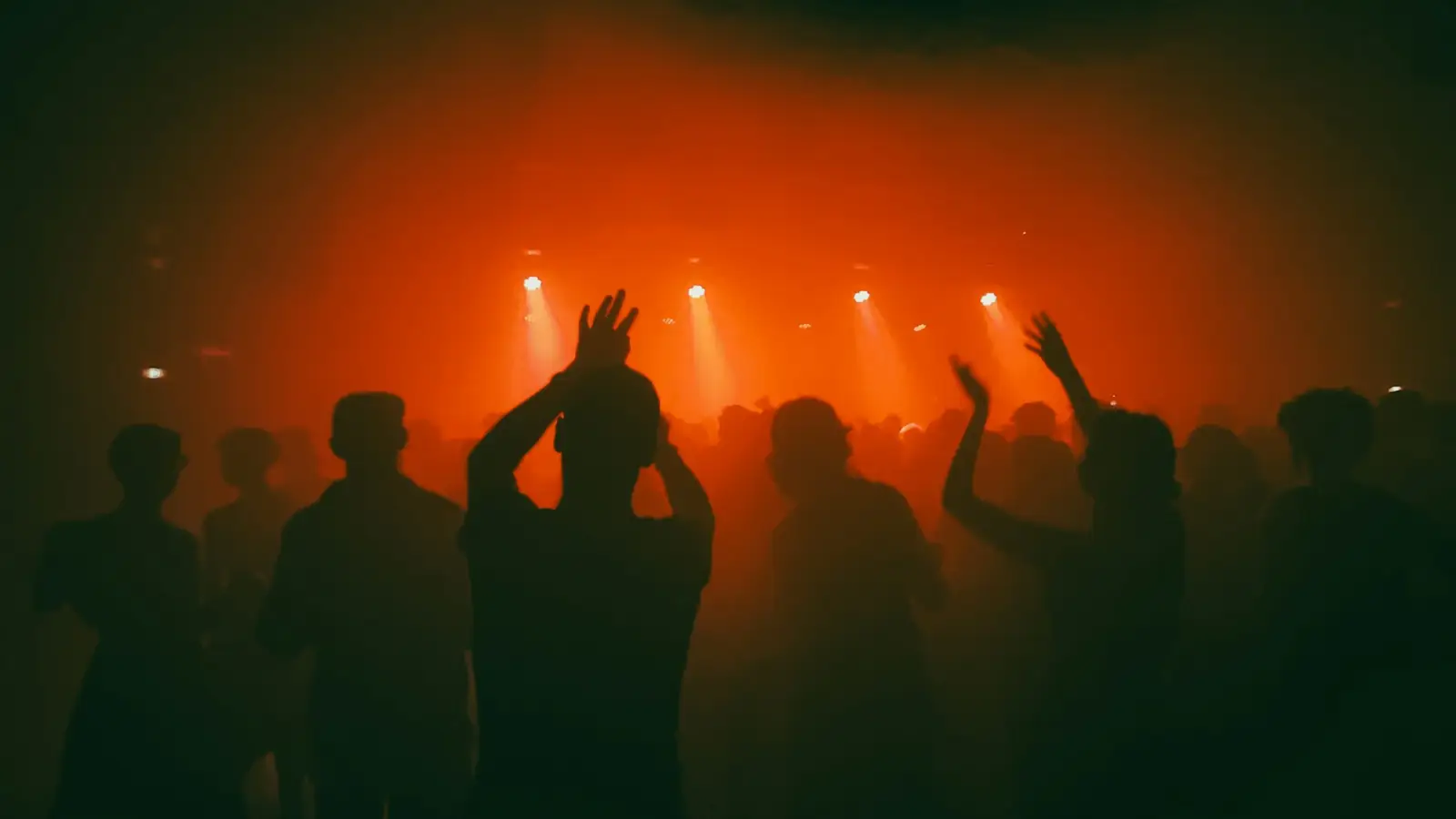
The techno reputation is an export, not a description
Ask anyone outside Germany what Berlin sounds like and you get one answer. That answer is an export. It travelled because it is the part that is easiest to describe from a distance and the part that photographs well, and it is not wrong about what it describes. It is wrong about the proportions.
Inside the city the picture is flatter than that. House is not a support act here and it is not a niche. It has its own clubs, its own party series running in the same rooms for years, its own residents, and floors that are as sought-after as anything with a main-floor sign on it. Nobody who actually goes out here would describe house as the thing that happens before the real thing starts.
So the honest version is not that Berlin is a techno city with house underneath it. It is that Berlin runs both at full size, and only one of them made it into the postcard.
What separates Berlin house from Berlin techno
Less than people assume, and not the thing they assume. It is not tempo — plenty of house here sits at 124 and plenty of techno sits at 130, and the gap is smaller than a genre argument needs it to be.
What differs is what a record is asking the room to do. A techno record tends to state a condition and hold it: this is the pressure, stay in it. A house record tends to leave a gap and wait — the swing, the vocal that arrives late, the bar where the kick drops out. It is an invitation rather than an instruction, and a floor answers it differently. People face each other more. They stop and start. They talk between records without it counting as a failure.
That difference decides everything downstream: how long you can hold a room, when you can afford to break it, what a mistake costs you. It is also why the two coexist here rather than compete. A night that is nothing but instruction is exhausting by hour three, and everyone booking a line-up knows it.
A second floor is a sound, not a rank
This is the part that gets misread most often from outside. In a Berlin club, “second floor” names a different room with a different sound. It does not name a smaller booking, a lesser night or an overflow space for people who could not get into the good one.
Panorama Bar is the case that settles it. It sits above a main floor, it is a house room, it has its own residents and its own booking identity, and for a great many DJs it is the more coveted of the two. Nobody has ever been told they are playing upstairs instead of downstairs and understood it as a demotion.
The same pattern repeats at every scale in this city. A club with two rooms usually has two audiences, and people pick their room on the way in and stay in it. The second room is not the spillover. For a good share of the people in the building, it is the reason they came.
Where it actually gets played
I am not going to hand you a list of venues to turn up to, because a club is not a genre and the answer changes with whoever is booked. Berlin rooms do not have fixed sounds; they have fixed shapes. What is worth knowing is the shape.
There are rooms that are house rooms most of the time, and they stop being hard to find the moment you stop looking only at the biggest names. There are party series that are house and nothing else, running monthly in the same room for years, with a crowd that turns up for the series rather than for whoever is on it. There are the clubs on the water and the open-airs, which run warmer and longer, and where house is the default rather than the exception from May to September. And there are the small bars — hundred-capacity, no listing, no photographer — which is where the scene actually is, in the sense that it is where people go when nobody is looking.
I have played most of the categories — about blank, Sisyphos, Watergate, Ritter Butzke, Hoppetosse, Chalet, Wilde Renate, IPSE, Arena Club, Alte Münze, and a long tail of rooms nobody has heard of. The rooms nobody has heard of are the ones I would send you to first.
The warm-up is a craft, not a consolation
Worth saying separately, because the two get confused constantly. House does carry a lot of warm-up slots in this city. That is a fact about warm-ups, not a fact about house — the early hours ask for records that leave room, and house has more of those. It says nothing about where the genre tops out.

And the slot deserves better than the reputation it has. A warm-up is not a quieter version of peak time; it is a different task. You are building the room the next DJ walks into, and the room is mostly empty when you start. Played properly it is one of the best slots in the building — nobody is watching, which means you can actually take a decision. Played as a demo reel for a bigger booking it wrecks the night for everyone who follows, and the person who did it usually never finds out.
DVS1 put this better than I can, and it is the argument I have spent the longest agreeing with in public.
What “underground” is doing in that sentence
The word has been worn flat, mostly by people using it as a marketing adjective. It is worth keeping anyway, because it names a real distinction: whether a night is organised around the people on the floor or around the people who will see it afterwards.
You can tell within twenty minutes. Where is the booth — facing the floor as a stage, or set into the side as furniture? Is there an LED wall? Are phones up? Is the warm-up playing warm-up music? None of that is about how obscure the records are.
The floor is not a stage is the long version of that argument, and it is roughly the whole basis on which I decide what to play.
Where this project sits in it
Hybrid Flight is a house project — house, and the subgenres either side of it: leftfield, balearic, acid, dub, piano, power. Sets are built around emotional arc rather than around a genre, which in practice means the tempo moves and the mood does not. Eighteen years of it, and about 1,200 nights; the short version is on one page.
The recorded side sits on Vacare Edition. The Between Coasts EP was written between Andalusia, Ibiza and Berlin, which is a fair description of where the sound comes from — the Mediterranean end of house, played in a city that mostly does not do that.
Where the sound goes when it stops arguing with the city is its own guide — pads, repetition, and the state between euphoria and melancholy that the balearic end of this runs on. What happens to a track once the room has been open long enough is a separate guide too, and the quieter end of it has a mix rather than an essay. What the word balearic actually means — an approach to choosing rather than a style — is its own guide again, and the island that exported the word gets the same treatment this page gives Berlin. There is also a mix recorded to an empty room, and what that says about the word underground. For promoters, what the label European house DJ actually tells you is written out separately. The two ends of a night have guides of their own — what daylight does to a floor and the blue hour as a technique. And the Codex is the argument behind all of it, written out at length rather than implied.
Is Berlin a house music city or a techno city?
Both, at full size. Techno is the export reputation — the sound that travelled, because it is the easiest to describe from a distance. Inside the city house has its own clubs, its own long-running party series, its own residents and floors that are as sought-after as any main room. Panorama Bar is the obvious example: a house floor nobody treats as a support room.
What is the difference between house and techno in Berlin?
Not tempo — the ranges overlap heavily. The difference is what a record asks of the room. Techno tends to state a condition and hold it; house tends to leave a gap and wait, through swing, a late vocal, or a bar where the kick drops out. A house floor starts and stops and faces inward; a techno floor holds a single state.
What does “second floor” mean in a Berlin club?
A different room with a different sound — not a smaller booking and not overflow. Panorama Bar sits above a main floor, is a house room, has its own residents, and is the more coveted of the two bookings for a great many DJs. A club with two rooms usually has two audiences, and people choose their room on the way in.
Where do you hear house music in Berlin?
In rooms that are house rooms most of the time, in party series that are house and nothing else and have run monthly for years, on the water and at the open-airs from May to September, and in the small bars with no listing. A club here does not have a fixed genre — it has a fixed shape, and the booking decides the rest.
What does a warm-up DJ play in Berlin?
House, usually, and slower and deeper than the headliner — because the early hours ask for records that leave room, not because house is the support genre. The task is to build the room the next DJ walks into. A warm-up played as an audition costs the whole night, and the person who did it rarely finds out.
What counts as underground house?
Not how obscure the records are. Whether the night is organised around the people on the floor or around the people who will see it afterwards. The booth position, the LED wall, the phones and the warm-up all tell you inside twenty minutes.
Hear it rather than read about it.
Emotional Dancefloor Atmosphere is a long-form mix built as an arc rather than a playlist — mood before genre, with an unreleased demo somewhere in the middle. It is the shortest honest answer to what any of the above sounds like.
The arguments this comes out of.
The positions this project works from — on DJ craft, club culture and the industry built around them.
Why a Room Dances Together
The feeling of a room becoming one thing is not an effect of the lights or the volume. It is the oldest social technology we have, working exactly as designed.
Better Than You Think
"If you're an artist, remember that in 2026 there's not a single part of the system that isn't faked. You're probably doing better than you think."
Two Brushstrokes
His image: a painting nobody can see, on a platform where two brushstrokes fit — and the whole canvas hangs somewhere else, on a site nobody visits.