
Why Amsterdam Dance Event matters.
At ADE, a party is rarely just a party. It is a label launch, a roster card, a business meeting and a declaration that you still belong in the room.
ADE · Industry
7 min read
September 2026
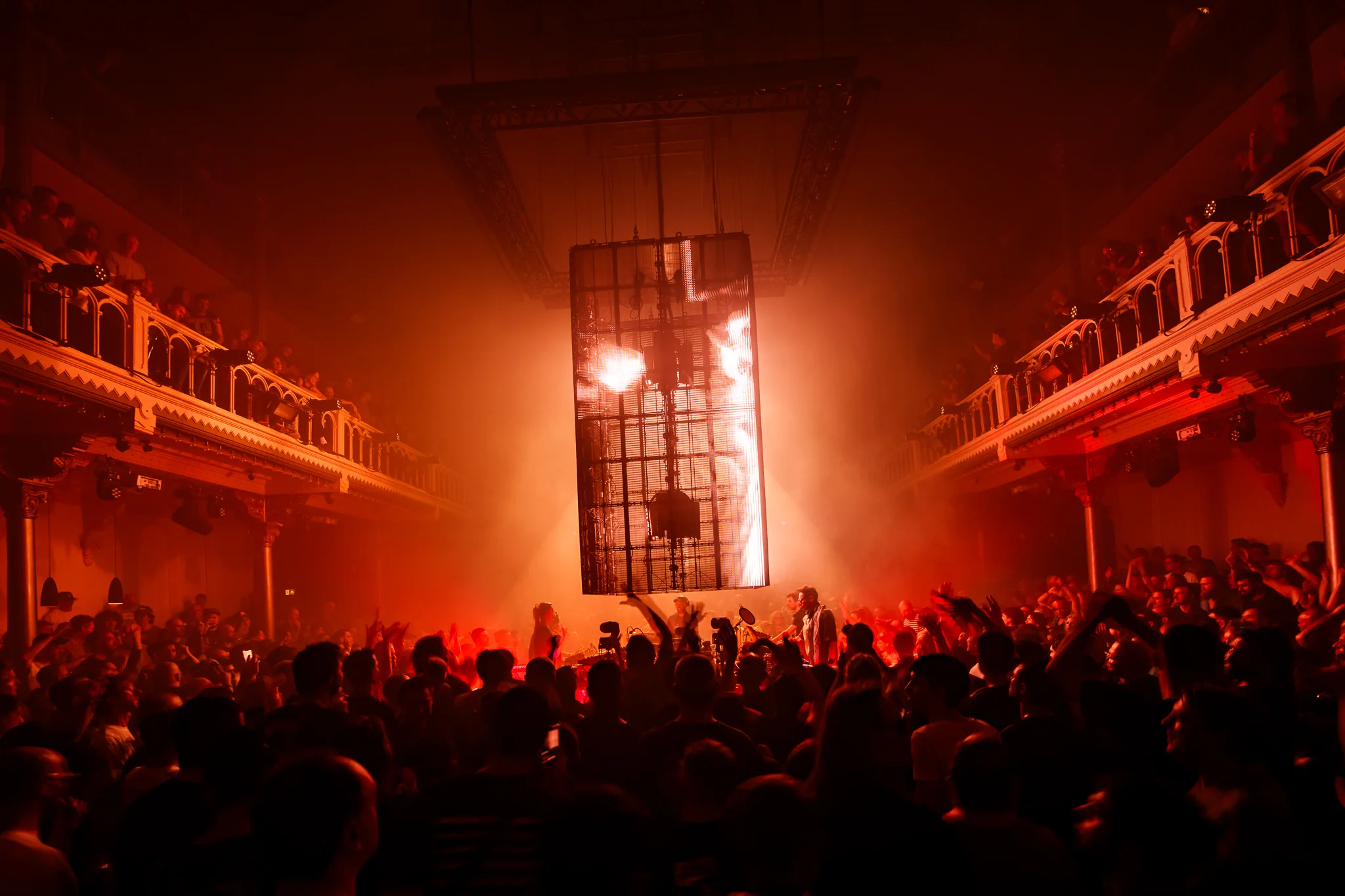
By Wednesday afternoon, Amsterdam has stopped behaving like a city and started behaving like a calendar.
Every coffee has an end time. Every conversation finishes with somebody saying they will see you later, although both people know there are six different versions of later happening in six different parts of town. By night the map is a chain of saved locations: twenty minutes here, a bike across the water, one drink there, a cab to somewhere you promised you would show your face.
You arrive at a party just as somebody else is leaving for the party you came from.
This is Amsterdam Dance Event. Not the conference programme, not one festival bill and not one club night, but the movement between all of them. For five days, electronic music compresses enough of itself into one city that being in the right room can feel like being in the industry at all.
The annual meeting point
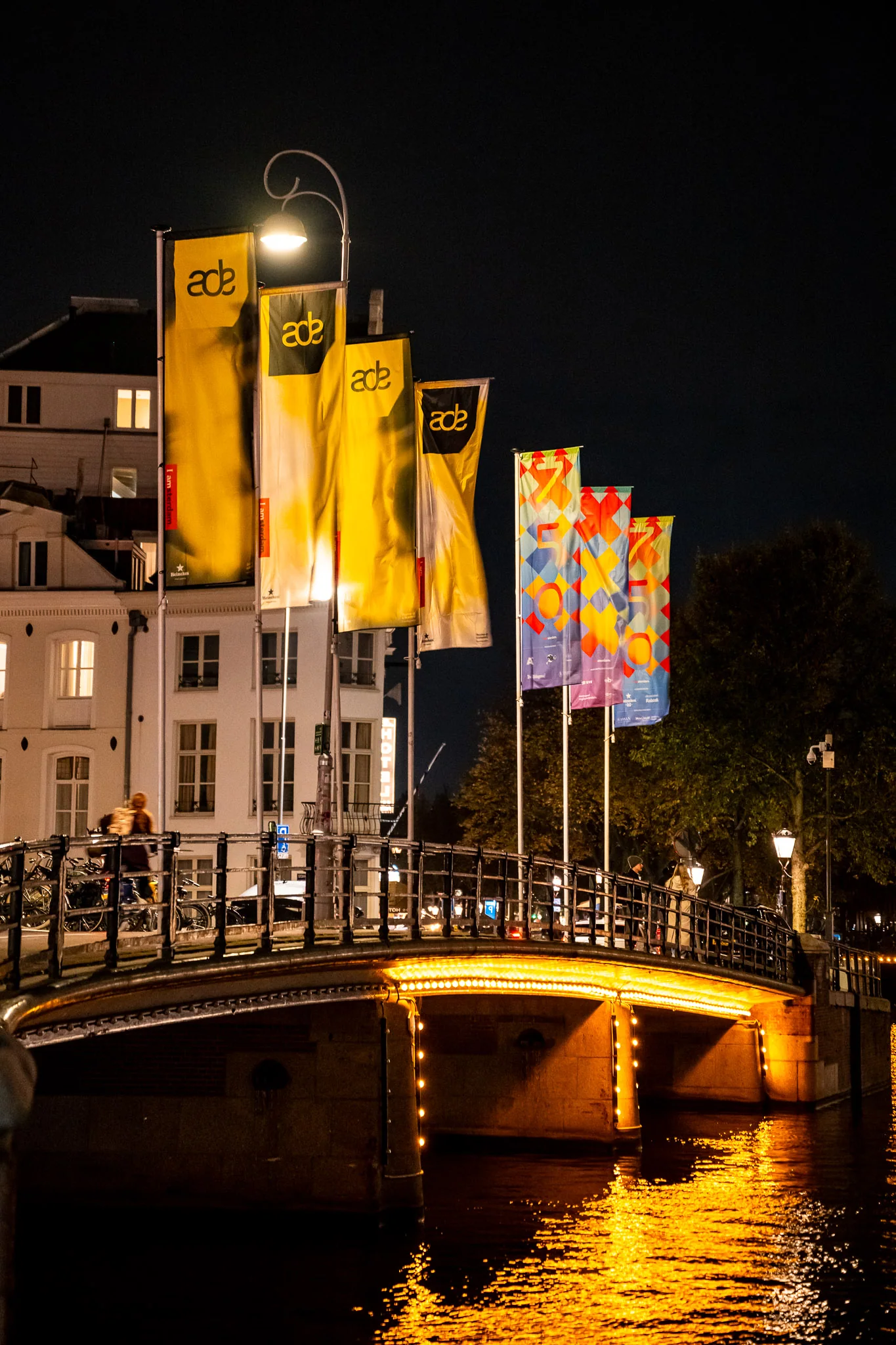
ADE began as a small music conference in 1996. This October it turns thirty. Its own figures for 2025 describe more than 1,200 events in over 300 locations, with 11,000 music professionals among a record 600,000 visitors.
The scale is useful, but it does not explain why the week matters. Plenty of large festivals are larger than the conversations that happen inside them. ADE became one of the central gatherings in electronic music because it puts almost every part of the work close enough to collide.
The artist is there. Their agent is there. The label that released the record is there, as is the distributor, the festival booker, the promoter from the city they want to play next year and the person who wrote about them before any of those people answered an email. During an ordinary month, those are separate threads. At ADE they can become one table, then one dancefloor, then a plan made at two in the morning that somehow survives into November.
It has worked like this for well over a decade now: the daytime speaks in the language of panels, meetings and strategy; the night tests the same ideas in rooms. The conference and the festival are not parallel programmes. They are the two shifts of the same working day.
Why nobody stays at one party
From outside, racing from one event to the next looks like a failure to enjoy any of them. Sometimes it is. Mostly it is the logic of the week made visible.
One event belongs to a label whose records you play. Another is hosted by an agency you have been speaking to. A promoter you know has taken a risk on a small room across town. Somebody who came to your showcase is playing at midnight and you said you would return the gesture. None of these obligations is dramatic on its own. Put them inside five nights and they become a route.
So people move. They arrive early enough to be seen, stay long enough for a conversation and leave before the room reaches the part of the night it was built for. Wristbands accumulate. Phone batteries disappear. Half the industry spends the week apologising for being late to people who are late themselves.
That does not make the parties fake. The records are real, the rooms can be excellent and every now and then a planned forty-minute appearance becomes six hours because the night wins. But ADE gives a party more jobs than a party usually has. It must be good. It must gather the right people. It must say something about its host. It must produce a memory, a photograph, a meeting or at least the sense that something happened there.
Why an ADE room is not just a room
Which is why the venue scramble begins long before October.
There are hundreds of locations in the official programme, but the number is misleading if you are trying to organise one event. A vacant space is not yet a club. The useful room has the right capacity, a sound system or the ability to take one, workable load-in, staff, late hours, neighbours who will tolerate those hours, the necessary permissions, a bar arrangement, a location people can reach and a price the night has some chance of carrying.
Then it has to be available during the same five days everyone else wants it.
The familiar clubs are familiar for a reason. They already know what an ADE night requires, and the audience already knows how to find them. That makes them safer, which makes them desirable, which means many are tied to promoters with established relationships or booked before most lineups exist. The unusual spaces are exciting for exactly the opposite reason, but every warehouse, gallery, office floor or former industrial site brings a new set of questions about sound, access, safety, hours and permission.
For larger or higher-impact events, the administrative clock is part of the competition too. Amsterdam advises organisers who need an event permit to apply ten to sixteen weeks ahead. A late idea is not only fighting for a room. It is fighting the calendar.
The best venue is therefore not necessarily the most beautiful one. It is the one you can actually secure, afford, operate and fill — without the character of the event disappearing in the compromise.
Why everyone fights for one anyway
If an ADE party were only measured at the door, a lot of them would make very little sense. Production is expensive. Artists are everywhere and therefore not always exclusive. Guest lists grow faster than paid tickets. Competition is not the event next door; it is the entire city.
Labels, promoters and agencies still throw themselves at it because the return is not contained in that night's bar total.
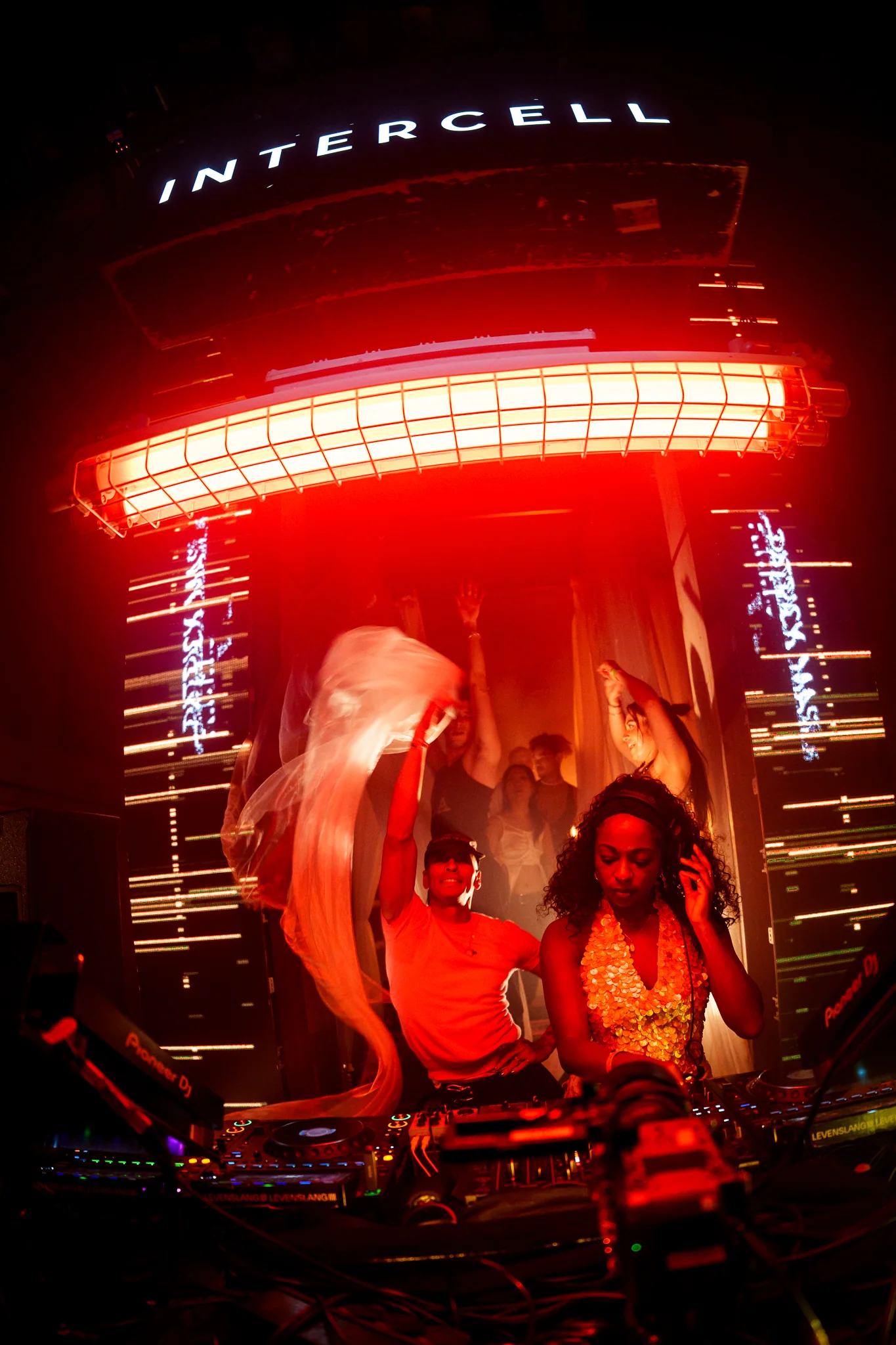
For a label, a party turns a sequence of releases into a scene people can enter. Artists who exist separately on streaming pages become a roster, and a roster becomes a point of view. For an agency, a showcase demonstrates more than a list of names: it shows how those names sit together and what kind of room they can hold. For a promoter, an ADE event is evidence that the identity of their night can travel beyond its home crowd.
And for all three, hosting changes the direction of the invitation. Instead of asking for twenty meetings, you create one place and ask twenty people to come to you.
That is why the room matters before anyone has played a record. A respected club lends context. An unexpected location creates a story. The right capacity makes the event look inevitable rather than half empty. The venue is not the container for the message. It is part of the message.
Visibility has its own gravity
There is an uncomfortable edge to all of this. Once visibility becomes the reason everybody must host something, the absence of an event starts to look like an absence of momentum.
That is rarely fair. The label with the best new music may not have the budget, the local relationship or the operational time to build a night in another country. A small agency can spend a year developing artists and still lose the right venue to a brand that decided in January. A promoter can do extraordinary work at home and arrive in Amsterdam without a room that makes the work legible to anybody passing through.
ADE does not create those differences, but it concentrates them. The week rewards infrastructure: people who can plan early, carry risk, call the right venue and persuade enough of the right people to choose their party from the hundreds available. The event on the night may last six hours. The ability to stage it was built over years.
This is also why smaller hosts collaborate. Two labels share a bill. An agency joins a promoter. A media platform lends reach, a local crew lends a room and a brand covers the piece nobody else could afford. Sometimes the combination is purely practical. Sometimes it creates a party none of them would have imagined alone. At its best, ADE turns competition for space into reasons to work together.
The thing underneath the rush
It would be easy to dismiss the week as networking with a kick drum, a trade fair that stays open until breakfast. That description is not entirely wrong. It is just incomplete.
People run from party to party because relationships in music are not made by email alone. They are made by showing up — for the label that took the chance, the promoter who found the room, the agent who kept the conversation alive and the artist playing to whoever managed to arrive before the next appointment. The rush is exhausting because the visibility matters, and the visibility matters because the relationships do.
Then, occasionally, the schedule breaks. You miss the next thing. The phone stays in your pocket. The people who came to be seen stop checking who has arrived, and the party becomes what it was pretending to be all along.
That is the room everybody spent the year trying to get.
Amsterdam Dance Event's overview and 2025 recap for the history, programme and attendance figures; the City of Amsterdam for event-permit lead times. ADE's 30th edition runs from 21–25 October 2026.
Why is Amsterdam Dance Event so important to electronic music?
ADE concentrates the people who make electronic music move — artists, labels, agents, promoters, venues, media, brands and audiences — in one city for five days and nights. That density turns meetings, showcases and parties into an annual place where relationships are renewed and the next year of the industry begins to take shape.
Why is it difficult to find a party venue during ADE?
A useful ADE venue needs more than an empty room. It needs the right capacity, sound, hours, location, technical setup, staff, permissions and price, all during the same five days that hundreds of other organisers want it. Established venues also have long-standing promoter relationships, so the most suitable rooms can be committed well before the public programme appears.
Why do labels, promoters and agencies host parties at ADE?
An ADE event makes a catalogue, roster or concept visible in a physical room. For labels it puts artists into one story; for agencies it shows how a roster works together; for promoters it demonstrates that their crowd and identity travel. The event may not pay for itself directly, but it can create attention and relationships that matter for the year ahead.
Leave the calendar behind.
Emotional Dancefloor Atmosphere is the long-form answer: mood before genre, arranged as an arc rather than a sequence of moments designed to be seen.